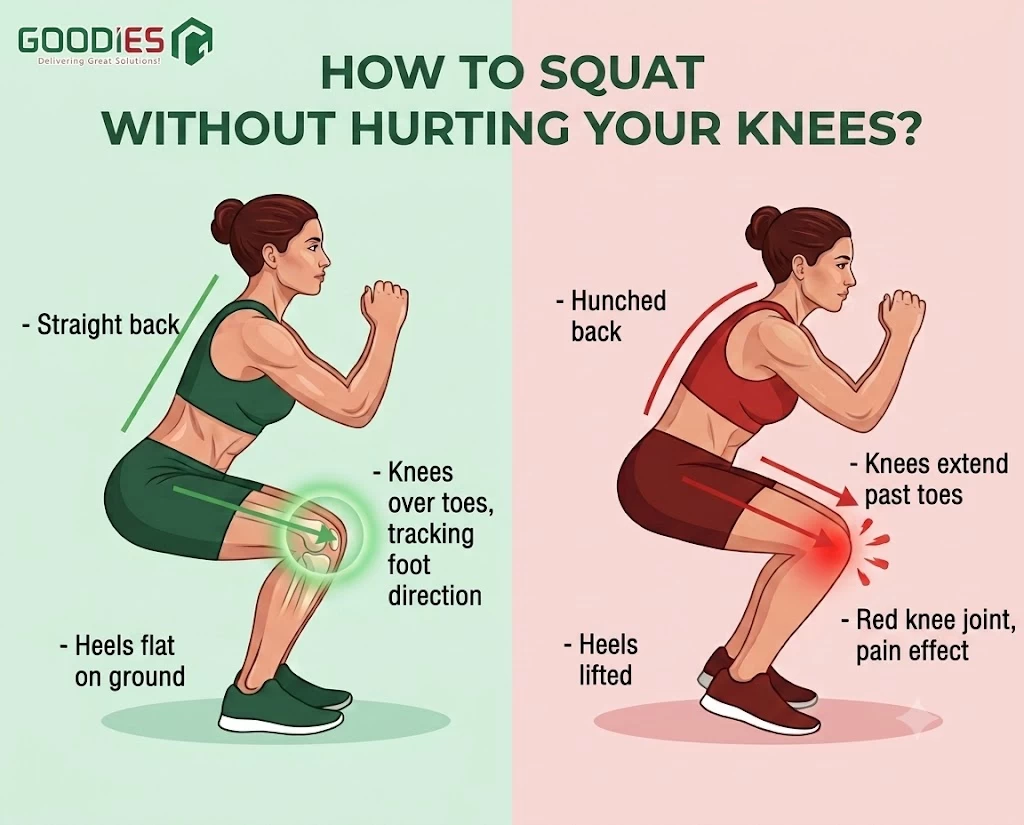
Many people experience knee pain or joint discomfort after doing squats and assume that squatting is bad for the knees. In reality, squats only become harmful when performed with improper technique. Let's review the correct squat form with Goodies and make sure you're doing it safely.
Correct Squat Technique
- Keep your back straight: Maintain a neutral spine throughout the movement to distribute force evenly and reduce stress on your lower back and spinal discs.
- Keep your knees aligned with your toes: As you lower your body, your knees should track in the same direction as your toes. Avoid letting your knees collapse inward (knee valgus), as this increases stress on the knee joint.
- Keep your heels on the ground: Distribute your weight evenly through your heels and the balls of your feet to maintain stability while effectively engaging your glutes and thigh muscles.
Common Squat Mistakes
- Rounding your back: A rounded back places excessive stress on the spine and lower back, increasing the risk of injury.
- Excessive forward knee travel with raised heels: When your heels lift off the floor, your body weight and any additional load shift forward onto your knees. This places extra stress on the kneecap and surrounding ligaments, making it one of the most common causes of knee pain after squatting.
Before progressing to heavier weights, master the Bodyweight Squat in front of a mirror. This helps ensure that your heels stay firmly planted on the floor, your back remains straight, and your movement pattern is correct before adding resistance.
You can find more details on our Facebook page!